We need better politicians
We are in a large, old factory building in Kreuzberg, West-Berlin. Once used for bread-baking, more than 900 political professionals, policymakers and innovators from around Europe met mid-January to bake new solutions to the challenges now facing the very fabric of our European societies: our democracies.
The sensation is tangible as we leave the taxi and the freezing Berlin winter behind and enter the Heeresbäckerei, the restored 19th century army bakery in Kreuzberg. The heat of the ovens is gone, but the heat of geopolitical tension is everywhere – in this room, from Greenland to Denmark, in Davos and in most European capitals. The world as we know it is changing fast, and we don´t quite know what to make of it.
The message from the President of the European Commission, Ursula von der Leyen, was therefore unusually sharp, as she spoke at the World Economic Forum in Davos January 21st: “We now live in a world defined by raw power. And while many of us may not like it, we must deal with the world as it is now. So, Europe must speed up its push for independence. »
Europe needs to free itself from digital dependency
The Political Tech Summit. It is a one-of-a-kind event where startups meet the world of politics. The underlying message is clear: both are needed if we are to renew trust in our democracies.
The reason is this: Europe needs to free itself from digital dependency on China and the US and therefore urgently need to step up its capability to scale tech startups. Securing trust in our democracies over the coming years requires that Europeans can manage and control our own digital infrastructure – and compete more effectively with China and the US, who are now far ahead. Only four of the worlds’ top 50 tech companies are European. According to the Draghi report from the European Commission (2024), Europe needs to invest 700-800 billion Euros annually just to keep pace.
The situation is a bit like the orcs in Tolkien’s Lord of the Rings, who with increasing frequency enter the land of Middle earth. Gandalf the wizard sees the signs of the times that few others do and tries – largely in vain – to warn the other leaders in the land.
So why do politicians not act faster, given the urgency? Is it a lack of understanding – or that they simple do not know how to respond?
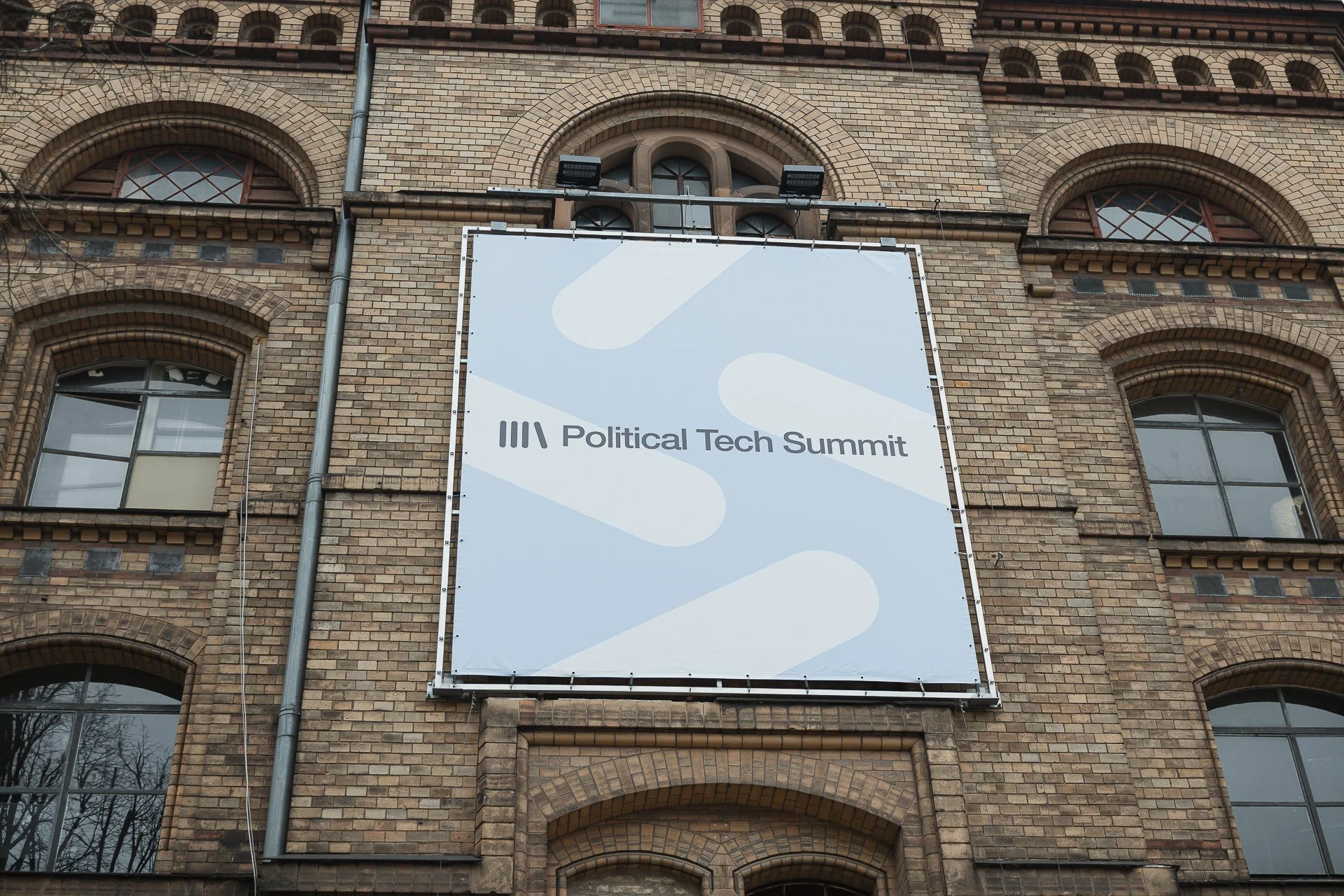
The Heeresbäckerei, the restored 19th century army bakery in Kreuzberg, was the perfect venue for the Political Summit as a place where the old meets the new. Photo: Kreativmedia
“I think the reason may be a combination of organisational inertia and the need to please voters to be re-elected. And the electorate does not seem to understand the urgency,” says Josef Lentsch. Keeping welfare benefits may feel closer to home than thinking long-term about job creation, income and future security. The founder of the Political Tech Summit has been around European politics for a long time. A co-founder of the liberal party NEOS in Austria in 2012, he has since dedicated his time to the interface between politics and technology.
“Maybe this is a moment where we will unite in Europe and are willing to defend and stand up for our own values,” says Tina Höfinghoff, development adviser with the Obama Foundation, founder of the Transatlantic Hub and former senior adviser at the Munich Innovation Ecosystem.
We meet her as a panellist in one of more than 100 sessions in the old bakery this weekend. Looking out of one of the windows, an old sign on the building across the yard shouts “Wegweiser” – “roadmap”. It feels almost prophetic, like something Gandalf himself might have pointed to.
With her in the panel is Daniela Schwartzer, Executive Board Member of the Bertelsmann Stiftung and one of Germany's leading experts on European and international politics and economics and the development of democracy and the rule of law. Says Schwartzer: - Especially during the two last years, there has been an awakening in Germany on the need for starting more companies and scaling tech companies. But we are still very far behind.
What gives her hope, is that we have a huge market in Europe which provides some level of social stability.
Need to change how democracy works
- Do you think the growing role of technology in politics is inevitable, or do we have a choice, asks the moderator.
“It is inevitable. We have a systemic revolution going on. I would therefore prefer Europe to be a first mover rather than a late adopter,” Schwarzer replies. “That doesn’t mean we roll out tech everywhere. We can’t yet fully measure its effect on our societies, either on individuals or on the fundamental shifts our economy will go through. But we can’t hide from it.”
“This is why we need to empower young people,” adds Höfinghoff. “There are so many great startups and young minds that we need to network together, so that we can create technology that works for good.”
Right now, Europe’s strength lies in its excellent research capabilities. When it comes to commercialising that research and scaling it to create jobs and impact, we are still lagging.
“Some of the smartest researchers in the world want to be in Europe, but we are not able to attract that many from elsewhere,” says Schwarzer. “So, what can we do? We need to create an environment with attractive business opportunities. Munich is becoming a hotspot. Berlin is trying. We need financial market reform and more available venture capital so that Europeans can innovate more and better.” Then she adds: “I think we need to change the way our democracies work, in order to keep our democracies.”
“We need to believe in ourselves. We had the Wirtschaftswunder in Germany in the 1960s. We have the strength, the knowledge,” says Höfinghoff. “We need to be more innovative, to break the ceilings. Now is the time to act.”
Need better politicians
“What types of politicians are voters looking for?” asks Rebekah Isakson rhetorically. We have moved to another of the many sessions at the summit, titled “Tech for Trust: Making Political Leadership Work When the Rules Are Changing”. Isakson is Head of Partnerships at the Better Politics Foundation in Berlin. Their aim is to equip courageous leaders with new tools and ideas to reimagine political systems.
Her answer is clear: voters are looking for political leaders who show authenticity, competence and benevolence. Trust in politicians has eroded so far that a significant share of voters say they would happily replace them with AI-created politicians.
Her words echo an editorial in The Economist on 20 November 2025: “When Harry Truman left office, he had many opportunities to get rich. He turned them down. ‘I could never lend myself to any transaction, however respectable, that would commercialise the prestige and dignity of the office of the presidency,’ he said.” The verdict in that piece is that we may need to revive some of the moral standards of the past if we want to rebuild trust.
“Trust is a flowing relationship between politicians and voters. Why do more people not engage in politics?” asks Yara Asmar, founder of Idea Department, which works to empower migrant women to enter politics in Germany. “Many people, especially women, have a lot of reasons not to trust the space in which they would want to engage. For some, it is due to discrimination and the polarisation of society. It leads to a fear of harassment if they engage.”
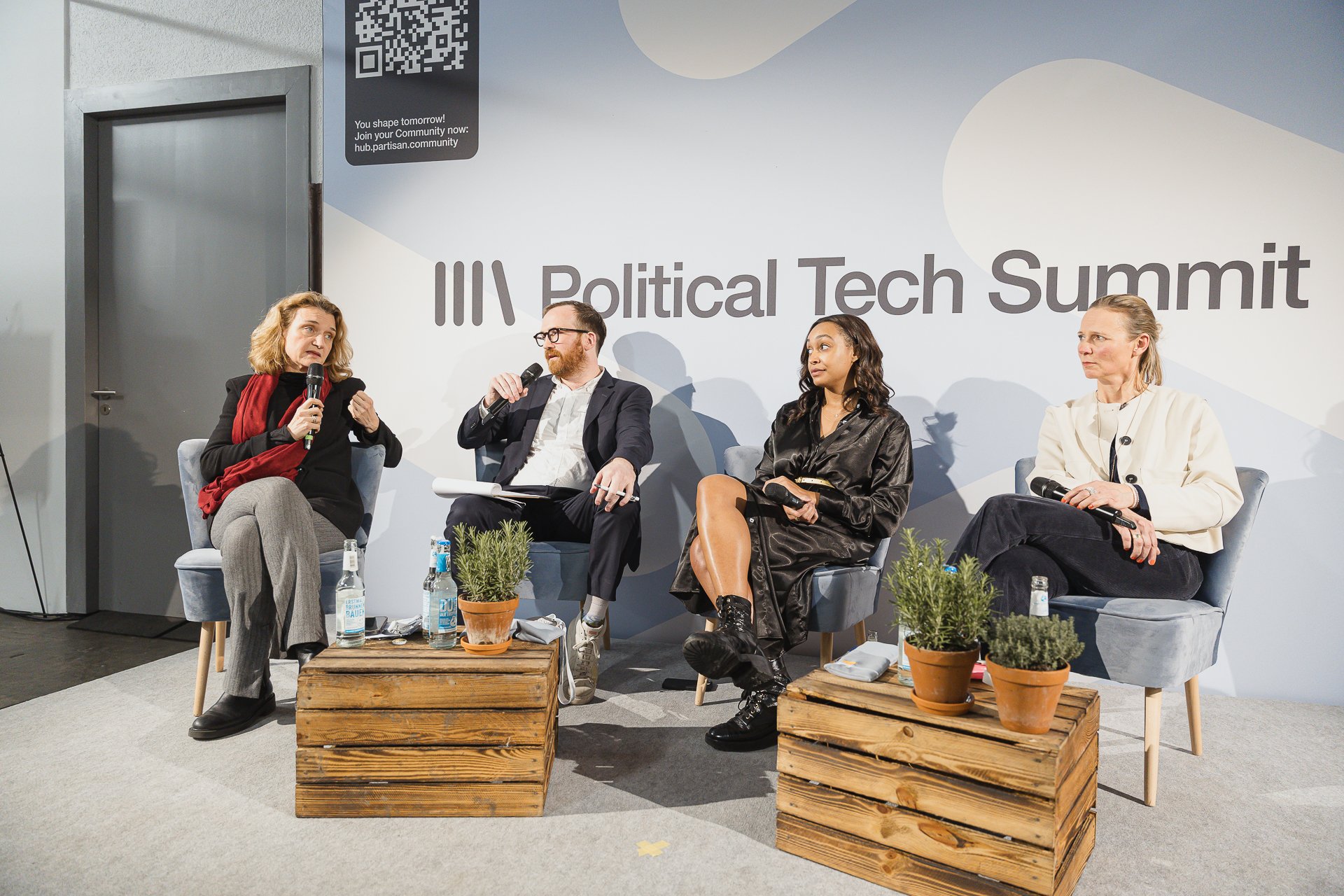
From left: Daniela Scwhartzer, Tom Moylan, Alexis Crews and Tina Höfinghoff. Photo: Kreativmedia
She believes this shrinks the talent pool of people willing to run for office, as the current situation filters out diversity in political leadership already at the entry point. Isakson adds that research based on surveys from more than 100 countries shows that the mental health of politicians today is worse than that of ambulance drivers.
Who wants to step into politics under those conditions? Trust in democracy and politicians is not only threatened by technology.
Nandor Tóth, a Hungarian founder of the company Stateless, works to improve election systems and data-driven outreach for politicians. His argument is that politicians do need to use technology better, but that this alone does not build trust. Personal presence, engagement with voters and genuine authenticity matter far more.
“Trust is falling in every institution of society today. It is a fundamental problem across society. And we cannot blame technology for that alone,” he says.
So what can restore trust in politics? Isakson leaves us with two simple actions we can all take: encourage good people – our friends – to engage in politics and write a “love letter” of encouragement to politicians we see doing good work. With the pressures they are under, they need it to carry on.
There is hope
As I speak with participants from across Europe, I try to understand their underlying sentiment. Is there hope for the future of democracy? Elisabeth Quell, a political communications expert from Berlin, believes there is.
“Yes, I have hope. I do believe there are more people who have good intentions than those who have bad. Democracy is the power of the group. The good will prevail. That is my hope.”
Anna Moors, representing the Young Political Communicators Club at the summit, refuses to surrender to the constant stream of negative headlines and describes herself as “mildly optimistic”. “I do feel mildly optimistic,” she says. “But maybe I have a more obliged feeling than anything else – not to give up hope.”
Linus Siebert, one of the speakers and representing Fortitude, thinks we will be under more strain before things improve.
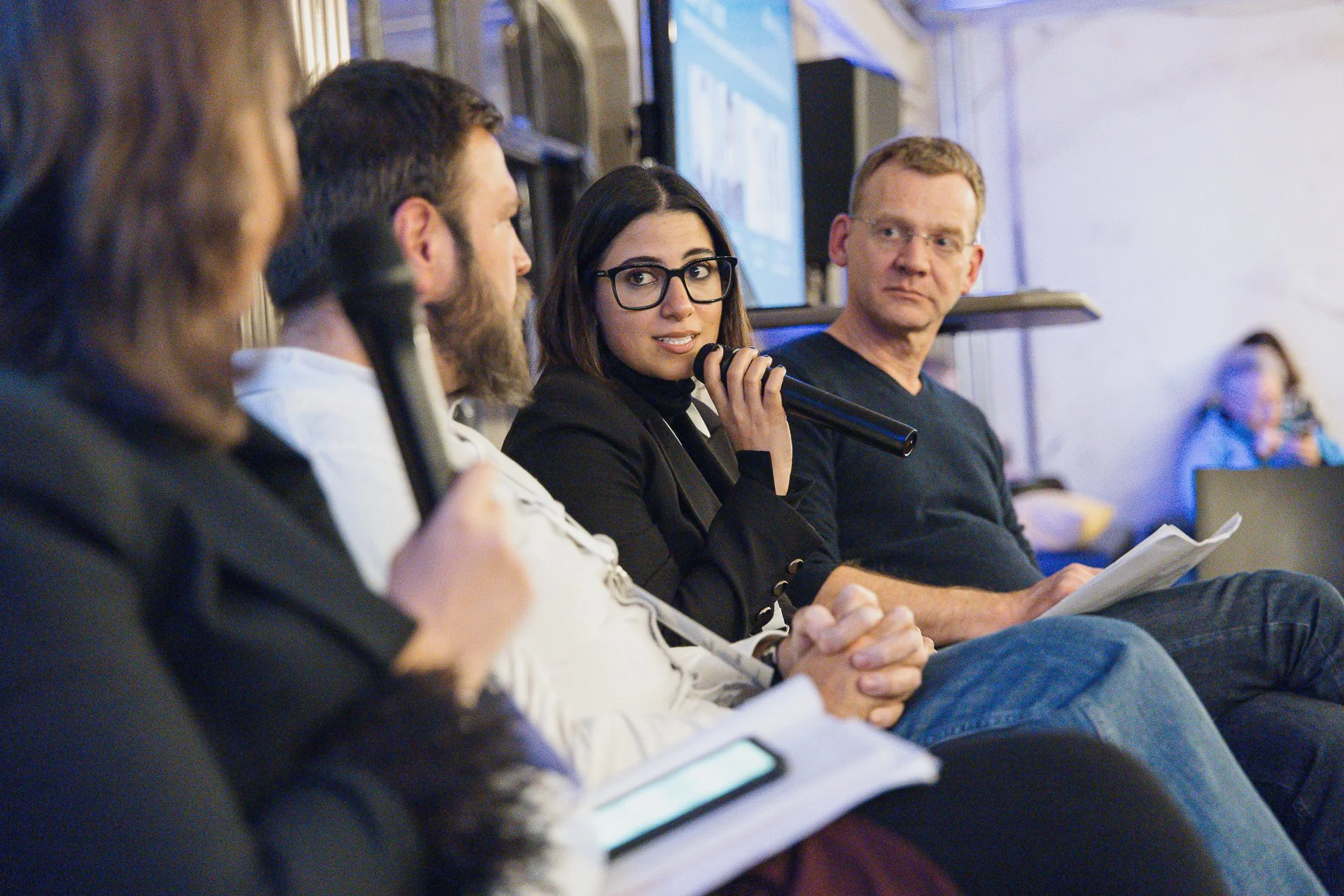
From left: Rebekah Ison, Nandor Tóth, Yara Asmar and Matthias Spielkamp. Photo: Kreativmedia
“The next years will be harder than we thought they would be,” he says. “But I see a lot of innovation from political actors. It will take some time for us to reach resilience. There is a light at the end of the tunnel. I think we have the wrong expectation that everything will just get better, because we rely on the infrastructure that has been here for 100 years. With more sovereignty and urgency, we can develop a better European innovation culture. The problem we must overcome is that Europe tends to become more innovative only when there is a crisis.”
“I do have hope. I don’t have optimism,” says Clinton de Preez, a leadership developer from South Africa. “I look past the moment of the day, which can be disheartening, and focus on the long term. I have the belief that things must go well eventually. History bends towards justice.”
“There needs to be a lot more innovation in politics. We need an organisational culture in existing parties that embraces innovation,” says Keira Roth from The Developer Society in the UK. “If the culture is set by an insecure leader, based on fear, where party members cannot make mistakes or share their opinions, there is no space for innovation.”
Her day job is to help progressive organisations use technology better. Being married to a British Liberal MP, she is currently not particularly encouraged by the situation in her home country.
“If you don’t have hope, you end up in despair. We must have faith in humanity. Our societies move in cycles, and right now we are in a negative cycle. But I hope we will come around again and get through it. I hope the next generation will be part of the solution. Our current democratic system was built in the 16th century. It is no longer fit for service. Our structures will have to change,” Roth says.
As I leave the warm hall and step into a taxi, back out into Berlin’s unusually freezing winter, I know that spring is just around the corner. Maybe a new spring will come for our democratic systems – and for our world – as well. The ideas for how to renew them seem to be readily available. The question is whether there is enough urgency and enough political will – across Europe, among its leaders, and among its voters, which ultimately means: you and me.
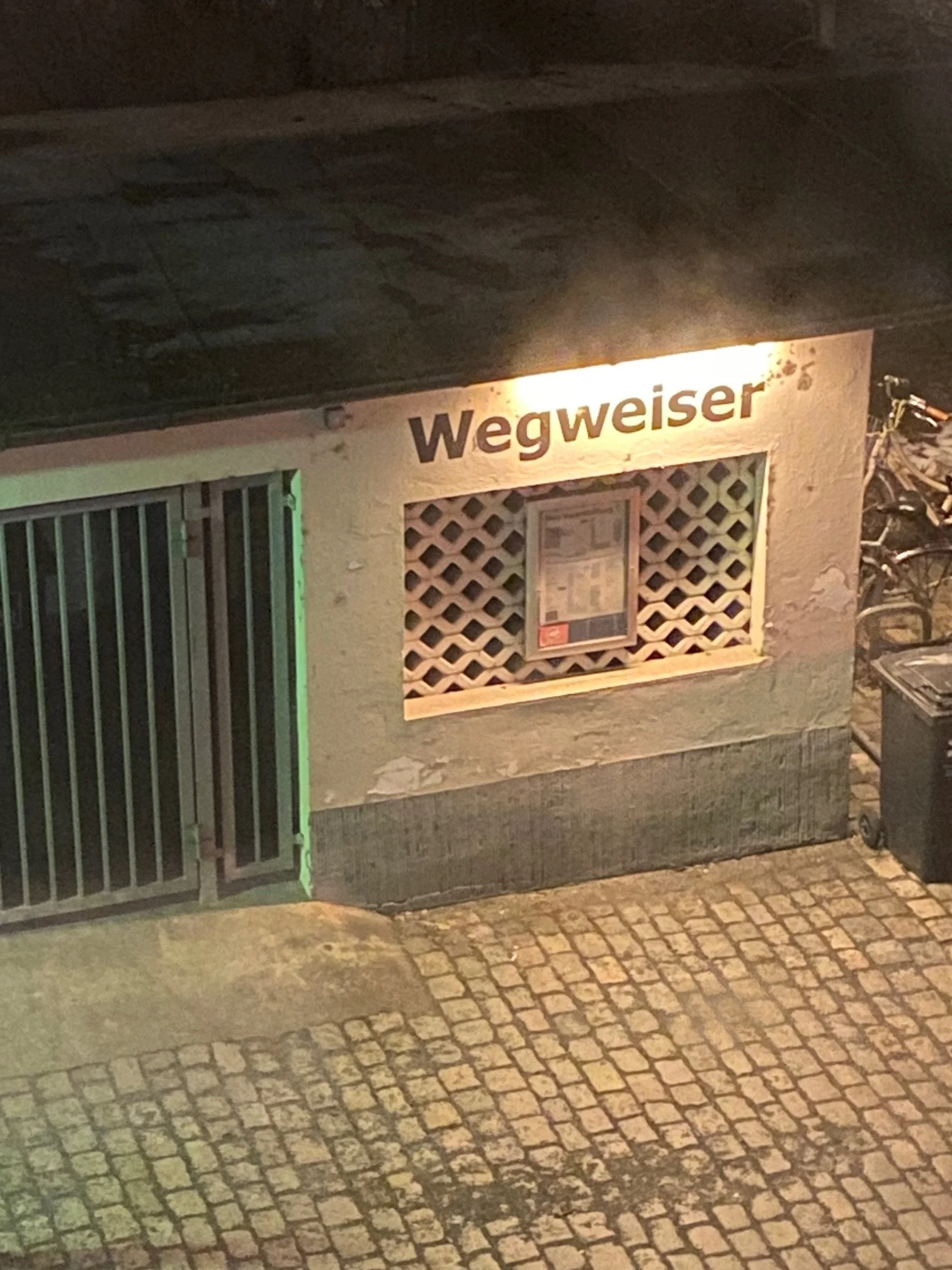
Photo: Hermund Haaland